

Last Updated: October 31, 2026
Quick Summary
Look for ethical fashion boutiques that can name their suppliers or factories, list fabric composition on every product page, and name specific certifications rather than implying them. Check whether workers are mentioned at all, and confirm any certification logo appears in the certifier's own directory.
- Ethical has no legal definition in the U.S., so any boutique can print it on a homepage.
- A GOTS tag proves organic fiber content, not fair wages or labor conditions.
- B Corp is a brand-wide score and does not verify every item on the shelf.
- Sort claims into verified, specific but unverified, and vague, where greenwashing hides.
- A boutique that admits gaps in traceability is more trustworthy than one claiming perfection.
Table of Contents
- Why Ethical Fashion Boutiques Deserve a Second Look
- Fair Labor and Worker Rights: The First Thing to Check
- Ethical Fashion Materials That Actually Matter
- Ethical Clothing Certifications and What Each Label Proves
- How to Spot Greenwashing in Fashion Before You Spend
- Your Sustainable Fashion Checklist for Any Boutique
- How to Evaluate a Boutique in Person and Verify Claims
- Shop the Drop That Fits Your Values
- Frequently Asked Questions
Why Ethical Fashion Boutiques Deserve a Second Look
The 2026 Ethical Fashion Guide scores brands out of 100 on how well they protect workers and the environment, then sorts them into five color bands. That single scorecard tells you something the price tag never will: not all boutiques are playing the same game. Shoppers are asking harder questions about where their clothes come from, and the answers are easier to find than most people think.
Ethical fashion boutiques are stores that sell clothing made with fair labor, lower-impact materials, and honest claims about how each piece was produced. The catch is that "ethical" has no legal definition in the U.S., so any boutique can print it on a homepage.
Below, we'll show you exactly what separates a real ethical boutique from a marketing slogan, plus a checklist you can use in person or online.
Fair Labor and Worker Rights: The First Thing to Check
Start with people, not fabric. A boutique that can't tell you who made its clothes has a labor story it would rather not share.
Fair labor means workers earn a living wage, work in safe conditions, and keep the right to organize. Guidance from Baptist World Aid Australia's Ethical Fashion Guide scores brands on worker protection and environmental practice together, because a brand that treats its sewers well usually treats its supply chain well too. Ask three questions:
- Who made this piece, and in which country?
- Does the boutique publish its factory list?
- Does it mention living wages or just "fair wages"?
Watch out: "ethically made" on a hangtag proves nothing on its own. If a boutique can't name a single supplier, treat the claim as unverified.
Ethical Fashion Materials That Actually Matter
Material choice is where most boutiques are happy to talk, and where the real differences show up.
Fairtrade Certified's guide to buying sustainable clothing recommends looking for organic cotton, hemp, TENCEL™, or recycled materials when you buy new. Research in the journal Sustainability also ties low-impact raw materials to greener supply chains. Here's what to scan for:
- Natural fibers: cotton, linen, hemp, wool
- Recycled materials: recycled polyester, deadstock fabric
- Dyeing and water use: does the brand mention low-water or low-impact dyeing?
Durability matters as much as origin. A well-made dress you wear forty times beats a cheap one you wear twice.
Ethical Clothing Certifications and What Each Label Proves
Ethical clothing certifications are third-party audits that verify specific claims a brand makes about labor, materials, or chemicals. They matter because they're checked by someone other than the seller, but the single most common shopping mistake is treating any label as a blanket endorsement of the whole garment.
Here's what the labels you're most likely to see on a boutique rack actually verify, and, just as important, what they leave out:
| Label | What It Verifies | What It Does Not Verify | Best For |
|---|---|---|---|
| Fair Trade (Fairtrade International / Fair Trade USA) | Fair prices, wage floors, and worker conditions at certified operations | The entire brand, or factories outside the certified scope | Labor standards at the certified level |
| GOTS (Global Organic Textile Standard) | Organic fiber content and processing, including chemical and wastewater limits | Fair wages or labor conditions | Organic cotton and fiber processing |
| B Corp | A brand-wide social and environmental score across governance, workers, community, environment, and customers | A specific product or factory | Overall brand practice |
| bluesign | Chemical and resource safety in fabric production | Labor conditions or fiber origin | Fabric production safety |
| OEKO-TEX Standard 100 | That a finished textile has been tested for harmful substances | Organic content, wages, or environmental footprint | Chemical safety of the finished fabric |
| Cradle to Cradle Certified | Material health, circularity, and social fairness across a product's design | A brand's entire catalog | Product-level circularity |
A few patterns are worth internalizing:
- A GOTS tag proves organic fiber, not fair wages. A boutique can carry a GOTS-certified tee sewn in a facility no auditor has visited for labor standards.
- B Corp is a brand-level score, not a product claim. It tells you the company has been assessed on its overall operations; it does not mean every item on the shelf meets the same bar.
- OEKO-TEX and bluesign are chemical-safety labels. They're meaningful for what touches your skin and what leaves the factory, but they say nothing about who sewed the garment or what they were paid.
Stack the labels a boutique carries and look at what's missing. A rack with GOTS and OEKO-TEX tags but no labor certification is telling you the boutique has invested in fiber and chemistry, not in worker verification.
Pro Tip
Ask the boutique which certifications apply to the specific garment in your hand, not to the brand as a whole. "Do you carry certified brands?" gets a yes. "Is this piece GOTS-certified, and can I see the tag?" gets an answer you can check.
One more caution: certification logos are easy to reproduce on a hangtag or product page. Before you trust a label, confirm the certification body actually lists the brand. GOTS, Fair Trade, B Corp, and OEKO-TEX all publish searchable directories of certified companies, and a legitimate boutique will not mind you checking.
How to Spot Greenwashing in Fashion Before You Spend
Greenwashing is when a brand makes a sustainability claim it can't back up. It's common, and it's getting sneakier, but the useful skill isn't memorizing a list of bad words. It's learning to sort every claim a boutique makes into one of three buckets: verified, specific but unverified, and vague. Most greenwashing lives in the third bucket, and the fix is to push claims from bucket three into bucket one or two before you spend.
Pensy.....Clear Sandal Heels →
The three-bucket test
- Verified: A named third-party certification that covers the specific claim, and the certifier's directory lists the brand. Example: a GOTS tag on the garment itself.
- Specific but unverified: A concrete, checkable statement the boutique stands behind but no outside auditor has confirmed. Example: "Our tees are sewn in a family-run factory in Portugal that we visit twice a year, and here is the factory's name." You can't audit it, but you can hold the boutique to it.
- Vague: A claim with no mechanism, no number, and no named party. Example: "eco-conscious fabrics." This is where greenwashing hides.
Concrete red flags to watch for
- Vague words with no details. "Eco-conscious," "earth-friendly," "green collection," and "sustainable" with no qualifier are marketing, not information. A green leaf icon and nothing else belongs in the same bucket.
- A "sustainable collection" page next to fast-fashion volume. If one capsule is certified and the rest of the catalog turns over weekly with no supplier disclosure, the collection is a marketing layer, not a business model.
- No supplier names, no certifications, no numbers. A boutique that can't name a single factory or mill is asking you to trust a claim it hasn't earned.
How to verify when certifications are absent
A missing label is not automatically proof of poor practices, many small, genuinely ethical boutiques can't afford certification, and certification fees are a real barrier for independent makers. So when a label is absent, look for supplier disclosure instead:
- A published supplier or factory list. Even a partial list with factory names and locations is a meaningful signal, because it can be checked and it commits the boutique publicly.
- A named mill or material source. "Our linen comes from a Belgian mill called X" is specific and checkable; "premium linen" is not.
- A stated wage policy. Look for a living-wage commitment with a named benchmark, not just "fair wages."
Watch Out
A boutique that answers "we're still working on traceability" is more trustworthy than one that claims perfection. Greenwashing is confident and vague; genuine effort is specific and often admits gaps.
Weighing trade-offs when no boutique is perfect
Most real boutiques are strong on one dimension and weak on another. A small local maker may have excellent labor transparency and local production but no organic certification and limited size range.
For a deeper breakdown of deceptive listing tactics, our guide on 8 red flags to spot in online clothing listings walks through the exact wording to distrust. If a boutique can't answer "what makes this sustainable?" in one specific sentence, that's your answer.
Your Sustainable Fashion Checklist for Any Boutique
Here's the sustainable fashion checklist we'd use before spending a dollar:
- Can the boutique name its suppliers or factories?
- Does it list fabric composition on every product page?
- Are certifications named, not just implied?
If you're building a wardrobe of pieces that last, our step-by-step guide on building a high quality capsule wardrobe shows how to apply this checklist across a whole closet.
How to Evaluate a Boutique in Person and Verify Claims
In-person shopping gives you an advantage online browsers don't get: you can touch the fabric and read the tag yourself.
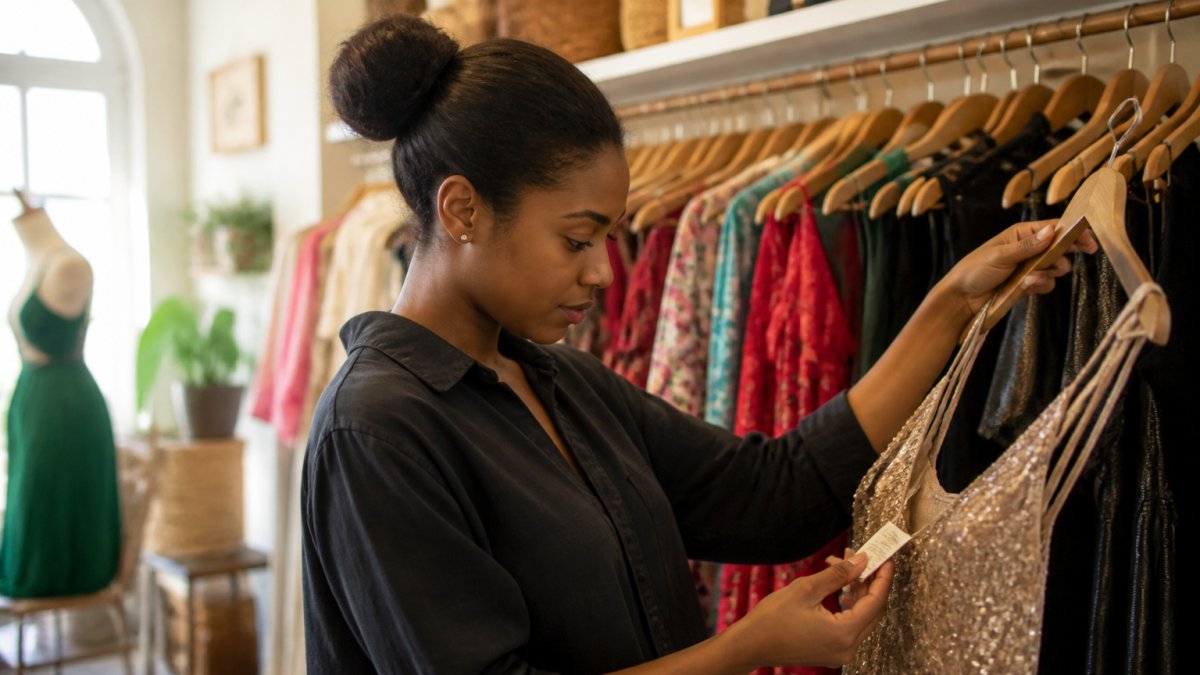
Here's how to check a physical boutique:
- Read the tag, not the sign. Composition and country of origin beat any poster.
- Feel the seams and hems. Cheap construction shows at the edges.
- Ask staff a supplier question. A good boutique answers without flinching.
When certifications are absent, ask for the brand's published supplier list or impact page. If neither exists, you're relying on trust, and trust should be earned.
Shop the Drop That Fits Your Values
Ethical shopping doesn't mean boring. It means knowing what you're buying and why. Learn how weekly fashion drops for trendy women work before you shop.
At Swagg Bootique LLC, we've been applying pressure since 2011 with new drops weekly and fast shipping. Pair a clear conscience with a clear heel: our Pensy clear sandal heels are vegan-friendly, open-toe, and $36.99.

Ready to shop a drop that matches your standards? Browse going out outfits for women and see what's new this week.
Frequently Asked Questions
What makes a fashion boutique ethical?
An ethical fashion boutique scores well on two fronts: how it treats workers and how it treats the environment. That means fair labor, safe working conditions, and living wages on one side, and lower-impact materials, responsible dyeing, and waste reduction on the other. The Ethical Fashion Guide scores brands out of 100 on exactly these two categories, so use that dual standard when you judge any boutique, including smaller ones.
What certifications should ethical fashion brands have?
Look for third-party certification labels rather than self-made claims. Fair Trade addresses worker treatment, the Global Organic Textile Standard covers organic fiber processing, and B Corp measures overall social and environmental performance. No single label proves everything, so check which one matches what you care about most. If a boutique carries none, ask direct questions about its supply chain and see whether the answers are specific or vague.
How can you spot greenwashing in fashion?
Greenwashing shows up as vague language with no proof. Phrases like eco-friendly or sustainable with no certification, no material breakdown, and no factory information are the clearest red flags. Real claims name the material, the standard, or the supplier. Ask what percentage of a garment is recycled or organic, and ask which certification backs the claim. A boutique that answers with specifics is worth trusting more than one that repeats slogans.
What materials should you look for in ethical clothing?
Fairtrade Certified recommends organic cotton, hemp, TENCEL, or recycled materials when buying new clothing. Each has trade-offs: organic cotton uses fewer synthetic inputs, hemp is durable, and recycled fibers divert waste but vary in quality. Check the fabric composition label, not just the marketing copy. A boutique that lists exact fiber percentages and explains dyeing and water use is giving you something you can actually verify.
The hardest part of ethical shopping isn't finding boutiques that talk about values. It's finding one that delivers on them without making you wait. Swagg Bootique LLC combines weekly drops, fast shipping, and a VIP list that rewards you with 10% off your first order and early access to new collections. Get started with Swagg Bootique LLC and build a wardrobe you can feel good about wearing.

