

Table of Contents
- Step 1: How to Measure Body Shape for Clothing
- Step 2: Identify Your Body Type
- Step 3: Best Dress Styles for Hourglass Figure and Other Shapes
- Step 4: Waist Definition and Cinching Techniques
- Step 5: Cute Dresses for Curvy Body Types
- Step 6: Dresses to Avoid and Budget-Friendly Options
- Conclusion
Last Updated: August 25, 2026
Finding the right dress for your body type isn't about hiding what you have, it's about understanding your proportions and choosing silhouettes that make you feel confident. According to research from the National Organization for Women, 78% of girls are unhappy with their bodies by age seventeen, and that dissatisfaction often follows women into adulthood. How to pick dress for body type comes down to three things: knowing your measurements, identifying your shape, and selecting styles that balance and flatter your unique proportions. At Swagg Bootique LLC, we've built our entire collection around this principle, offering trendy dresses designed to help every body type stand out and feel amazing.
This guide walks you through the exact process to find dresses that work for YOUR body, not someone else's. Whether you're shopping for a night out, a birthday celebration, or a special occasion, understanding how to pick dress for body type transforms the entire experience.
Step 1: How to Measure Body Shape for Clothing
Your measurements are the foundation for choosing flattering styles. You don't need a professional tailor, just a soft measuring tape and five minutes.
Taking Your Measurements at Home
Grab a soft measuring tape. Wear something fitted or go without a shirt so the tape sits directly on your skin. Measure in a mirror if possible, and keep the tape snug but not tight.
Bust: Measure around the fullest part of your chest, keeping the tape parallel to the ground.
Waist: Measure at your natural waistline, the narrowest part of your torso, usually about an inch above your belly button.
Hips: Measure around the fullest part of your hip and thigh area, usually 7-9 inches below your waist.
Shoulder width: Measure across your back from the tip of one shoulder to the tip of the other, in a straight line.
Write these numbers down. You'll use them to identify your body type and understand your proportions.
Finding Your Body Proportions
Proportions matter more than absolute measurements. Compare your bust, waist, and hip measurements to understand how your body is balanced.
Bust-to-hip ratio: Subtract your waist from your bust, then subtract your waist from your hips. If these numbers are roughly equal, you have balanced proportions. If your bust is significantly larger, you're inverted triangle. If your hips are much larger than your bust, you're pear-shaped.
Waist definition: How much smaller is your waist compared to your bust and hips? A 10-inch difference or more suggests a defined waistline. Less than 8 inches means your waist is less pronounced, indicating a straighter silhouette.
Shoulder-to-hip alignment: Are your shoulders wider than your hips, narrower, or the same width? This determines how you should balance your proportions with necklines and hemlines.
Step 2: Identify Your Body Type
Once you have your measurements and understand your proportions, identifying your body type becomes straightforward. Research from the International Textile and Apparel Association shows that dress style recommendations differ significantly based on body shape, with proper waistline definition being crucial for flattering fit.
Hourglass Shape
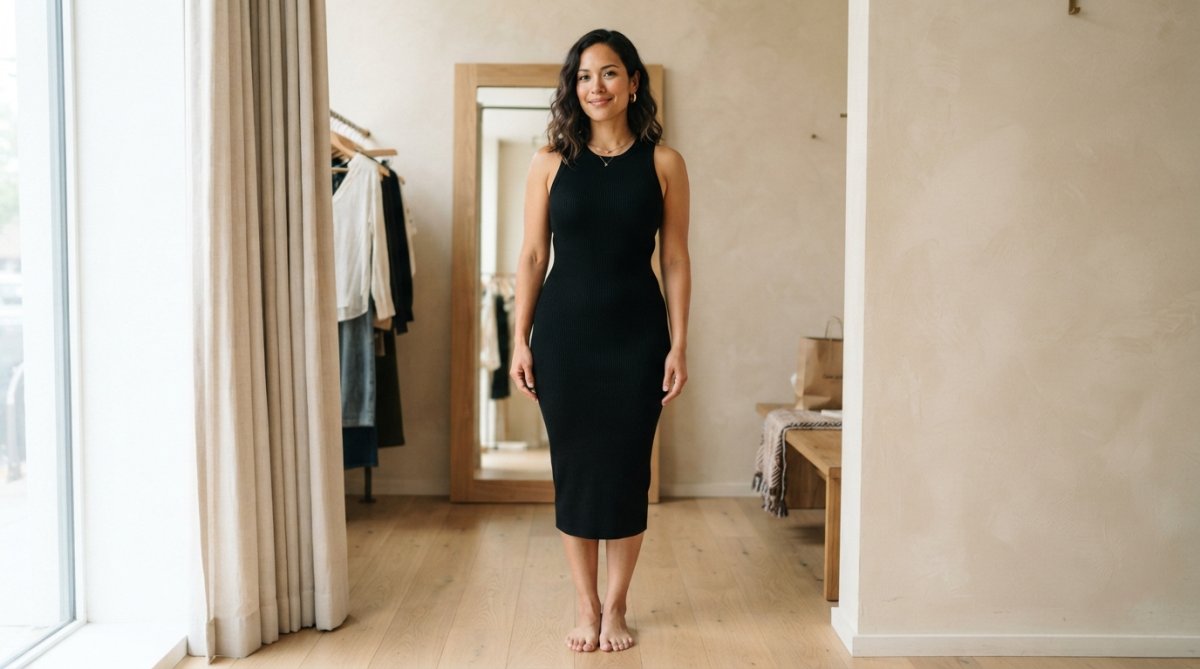
Your bust and hip measurements are roughly equal, and you have a clearly defined waist that's at least 10 inches smaller than both. Your shoulders and hips are balanced, creating an X-shaped silhouette. Styles that cinch at the waist work beautifully for you.
Pear Shape
Your hips are noticeably larger than your bust, and your waist is defined but narrower than your hip measurement. Your shoulders are narrower than your hips, creating a bottom-heavy silhouette. Styles should draw attention upward and balance your proportions by adding volume or visual interest to your upper body.
Apple Shape
Your bust is larger than your hips, and your waist is less defined. You tend to carry weight in your midsection and upper body. You need styles that define your waist and minimize emphasis on your midsection. A-line and wrap silhouettes work well because they skim over the middle without clinging.
Rectangle Shape
Your bust, waist, and hip measurements are relatively similar with minimal waist definition. Your shoulders and hips are roughly the same width, creating a straight, boxy silhouette. Creating the illusion of a waistline is key. Styles with ruching, belts, peplum details, or horizontal stripes at the waist help define your shape and add curves.
Inverted Triangle Shape
Your shoulders are significantly wider than your hips, and your bust is larger than your hip measurement. You carry more weight in your upper body and shoulders. You need to balance your proportions by adding volume to your lower body and keeping your upper body simplified. A-line, flared, and asymmetrical hemlines work best.

Step 3: Best Dress Styles for Hourglass Figure and Other Shapes
Now that you know your body type, it's time to choose silhouettes that actually flatter you. How to pick dress for body type hinges on matching the right cut to your proportions.
Silhouettes That Flatter Each Body Type
For hourglass figures: Fit-and-flare dresses, wrap dresses, and bodycon styles all work because they hug your curves and emphasize your waist. Look for dresses with defined waistlines, belts, or cinching details.
For pear shapes: A-line dresses, flared skirts, and asymmetrical hemlines add volume to your lower body and balance your narrower shoulders. Avoid clingy fabrics on the hip. Empire waist dresses work well because they draw attention upward.
For apple shapes: Wrap dresses, A-line silhouettes, and styles with ruching at the waist define your midsection without clinging. Look for fabrics with draping that skims over your middle. Belted dresses give you instant waist definition.
For rectangle shapes: Peplum dresses, styles with horizontal stripes or ruching at the waist, and wrap dresses all create the illusion of curves. Fitted bodices paired with flared skirts add dimension. Belted styles instantly create a waistline.
For inverted triangles: Flared, A-line, and asymmetrical hemlines balance your wider shoulders by drawing the eye downward. Avoid structured, fitted bodices; choose soft, draped fabrics on top. Maxi dresses with A-line silhouettes work beautifully.
Necklines and Their Impact on Proportions
Your neckline shapes how balanced your upper body appears.
V-necks and sweetheart necklines elongate your neck and draw the eye downward, making your shoulders appear narrower. These work beautifully for inverted triangles and apple shapes.
Boat necks and wide necklines emphasize shoulder width. Avoid these if you have narrow shoulders; they work for inverted triangles.
Halter and off-shoulder necklines draw attention to your shoulders and collarbone. These flatter inverted triangles and rectangles but can overwhelm pear shapes.
High necklines and turtlenecks can make your neck appear shorter and shoulders broader. Use strategically if you want to emphasize your shoulders.
Step 4: Waist Definition and Cinching Techniques
The waist is the most powerful tool for flattering any body type. A defined waistline creates balance, proportion, and visual interest, regardless of your natural shape.
Cinching your waist instantly changes how a dress hangs on your body. A belt cinched at your natural waistline creates an hourglass effect on any body type. Wide belts work better than thin ones because they provide more structure and visual impact.
Ruching, gathering fabric along seams or panels, creates texture and definition without adding bulk. This technique is especially effective for apple shapes and rectangles.
Wrap dresses are the ultimate cinching tool. They tie at the waist, allowing you to adjust how tight the cinch is and where it sits on your body.
Peplum details and ruffles at the waist add volume and definition. These work beautifully for rectangles and pears because they create curves where the body is straighter.
For added support and smoothness, consider shapewear like the Snatch Me Firm Control Shaper Thong ($17.99), which provides all-over slimming with silicone no-roll waist support.

Pro Tip
The key to waist definition isn't about hiding your body, it's about creating visual balance. A cinched waist makes your proportions appear more balanced, which is flattering on every body type.
Step 5: Cute Dresses for Curvy Body Types
Curvy bodies deserve dresses designed specifically for curves, not shrunken versions of straight-sized styles. According to research from the Journal of Fashion Marketing and Management, 80.7% of plus-sized women reported negative in-store shopping experiences, often due to limited options and poor fit. Understanding how to pick dress for body type makes online shopping easier.
Fabrics and Textures That Work for Curves
Structured fabrics like cotton blends and thicker materials hold their shape and provide support without clinging uncomfortably.
Fabrics with stretch (spandex blends) move with your body and provide comfort without sagging. Look for blends with at least 5-10% spandex.
Matte fabrics are more forgiving than shiny ones. Shiny materials highlight every curve; matte fabrics provide a smoother appearance.
Ruched or gathered fabrics add texture and visual interest while skimming over areas you might want to minimize.
Avoid thin, clingy fabrics like lightweight jersey. These cling to every contour and often look unflattering on curvy bodies.
Styling Hacks for Balanced Proportions
Layering adds dimension and allows you to control how much your body shows. A fitted dress with a lightweight cardigan instantly changes the silhouette.
Accessories draw the eye where you want it. A statement necklace draws attention upward; a belt cinches your waist.
Monochromatic dressing (wearing one color from head to toe) creates a long, lean line.
Strategic patterns like vertical stripes elongate your body. Horizontal stripes can make you appear wider.
Footwear affects your proportions too. Heels elongate your legs. Nude or skin-tone shoes create an unbroken line from hip to toe.
For maximum support and smoothness under your dress, the Hold Me Extreme Push-Up Bra with Removable Straps ($9.99) offers adjustable support and can be styled strapless, halter, or classic. Pair it with the Body Tape by Luv Me Luv ($12.50) for waterproof, sweatproof support that lasts all night.


Key Takeaway
The best dress for a curvy body type is one that fits you properly, not one that tries to minimize or hide your curves. Proper fit, strategic cinching, and the right fabrics make all the difference.
Step 6: Dresses to Avoid and Budget-Friendly Options
Understanding what NOT to wear is just as important as knowing what works.
Avoid clingy, thin fabrics if you want a smooth appearance. Lightweight jersey clings to every contour and often creates unflattering bunching.
Avoid completely shapeless, oversized styles if you want to look intentional. A dress should have some structure and definition.
Avoid styles that fight your proportions. If you're pear-shaped, a tight pencil skirt emphasizes your hips. If you're inverted triangle, a structured, fitted bodice with no volume on the bottom looks unbalanced.
Avoid necklines that work against you. Wide boat necks can overwhelm pear shapes; high turtlenecks can shorten necks and make shoulders appear broader.
Budget-friendly approach: Focus on fit first. A well-fitting $30 dress from Swagg Bootique LLC looks better than a poorly fitting $200 dress. Invest in basics (black, navy, white dresses in flattering silhouettes) and accessorize with trendy pieces. New drops arrive weekly at Swagg Bootique LLC.
Investment pieces: If you're buying one dress for multiple occasions, choose a timeless silhouette in a neutral color with excellent fit. A well-fitting wrap dress or fit-and-flare style works for years.
For secure, discreet support that won't show under fitted dresses, the Lingerie Tape Double Sided Clothing & Body Tape ($7.50) keeps everything in place for up to 48 hours with hypoallergenic adhesive.
Learning how to pick dress for body type is about working WITH your body, not against it. Your measurements, proportions, and body shape are the blueprint for choosing styles that make you feel confident and look incredible. Whether you're shopping for a night out, a birthday celebration, or a special occasion, understanding your silhouette and choosing flattering necklines, waist definition, and fabrics transforms how you feel in what you wear.
At Swagg Bootique LLC, we design dresses specifically for women who want to turn heads and feel amazing. Our collection features trendy silhouettes, new drops arriving weekly, and fast shipping so you're never caught without the perfect outfit. Join our VIP list to get 10% off your first order and exclusive early access to new collections, because the right dress shouldn't be hard to find.
| Body Type | Best Silhouettes | Key Features | Neckline Picks |
|---|---|---|---|
| Hourglass | Fit-and-flare, Wrap, Bodycon | Cinched waist, Defined waistline | V-neck, Sweetheart |
| Pear | A-line, Flared, Empire waist | Volume at hip, Fitted bodice | Boat neck, Off-shoulder |
| Apple | Wrap, A-line, Ruched | Waist definition, Draping | V-neck, Wrap |
| Rectangle | Peplum, Belted, Ruched | Waist cinching, Horizontal details | Any with belt |
| Inverted Triangle | A-line, Flared, Asymmetrical | Volume at hem, Soft draping | V-neck, Halter |
=== FAQ ANSWERS (audit these too, same rules) ===
[1] Q: How do I know which dress suits me based on my body type? A: Start by measuring your bust, waist, and hip circumference to determine your body shape. Once you identify whether you're an hourglass, pear, apple, rectangle, or inverted triangle, choose silhouettes that balance your proportions. For example, hourglass figures shine in fitted styles that emphasize the waistline, while pear shapes benefit from A-line dresses that balance wider hips. The key is selecting cuts that highlight your best features and create visual balance where you need it.
[2] Q: What is the best way to measure body shape for clothing at home? A: Use a soft measuring tape and wear fitted clothing or undergarments. Measure your bust at the fullest point, your natural waist (where you bend), and your hips at the widest point. Take measurements while standing relaxed with feet hip-width apart. Write down each measurement and compare them to determine your body proportions. If your bust and hip measurements are similar with a defined waist, you're likely an hourglass. Larger hips than bust suggests a pear shape, while a larger bust with smaller hips indicates an inverted triangle.
[3] Q: Why do some dresses look better on curvy body types than others? A: Fabrics, fit, and silhouette design all impact how dresses drape on curvy figures. Structured fabrics and ruching provide support and smooth lines, while stretchy materials like spandex blends allow dresses to move with your body without bunching. Cinching at the waistline creates definition and balance, and wrap dresses naturally accommodate curves while flattering proportions. Avoid overly loose or boxy cuts that hide your shape. The right dress should feel secure, comfortable, and enhance your natural curves rather than hide them.
[4] Q: Can body type change over time, and does that affect how I should dress? A: Yes, body type can shift due to age, lifestyle, fitness, and other factors. A woman who was once an hourglass might develop an apple shape as she ages, or vice versa. This is why taking fresh measurements every few years is smart, especially if you notice changes in how your clothes fit. Your styling approach should evolve with your body, what flattered you at 20 may not work the same way at 30 or 40. Staying aware of your current proportions ensures you're always choosing silhouettes and techniques that make you feel confident.
Frequently Asked Questions
How do I know which dress suits me based on my body type?
Start by measuring your bust, waist, and hip circumference to determine your body shape. Once you identify whether you're an hourglass, pear, apple, rectangle, or inverted triangle, choose silhouettes that balance your proportions. For example, hourglass figures shine in fitted styles that emphasize the waistline, while pear shapes benefit from A-line dresses that balance wider hips. The key is selecting cuts that highlight your best features and create visual balance where you need it.
What is the best way to measure body shape for clothing at home?
Use a soft measuring tape and wear fitted clothing or undergarments. Measure your bust at the fullest point, your natural waist (where you bend), and your hips at the widest point. Take measurements while standing relaxed with feet hip-width apart. Write down each measurement and compare them to determine your body proportions. If your bust and hip measurements are similar with a defined waist, you're likely an hourglass. Larger hips than bust suggests a pear shape, while a larger bust with smaller hips indicates an inverted triangle.
Why do some dresses look better on curvy body types than others?
Fabrics, fit, and silhouette design all impact how dresses drape on curvy figures. Structured fabrics and ruching provide support and smooth lines, while stretchy materials like spandex blends allow dresses to move with your body without bunching. Cinching at the waistline creates definition and balance, and wrap dresses naturally accommodate curves while flattering proportions. Avoid overly loose or boxy cuts that hide your shape. The right dress should feel secure, comfortable, and enhance your natural curves rather than hide them.
Can body type change over time, and does that affect how I should dress?
Yes, body type can shift due to age, lifestyle, fitness, and other factors. A woman who was once an hourglass might develop an apple shape as she ages, or vice versa. This is why taking fresh measurements every few years is smart, especially if you notice changes in how your clothes fit. Your styling approach should evolve with your body, what flattered you at 20 may not work the same way at 30 or 40. Staying aware of your current proportions ensures you're always choosing silhouettes and techniques that make you feel confident.
This article was written using GrandRanker