

Table of Contents
- Step 1: Understand Your Body Shape Before Shopping for Dresses for Curvy Figures
- Step 2: How to Measure for a Perfect Dress Fit
- Step 3: Choose Cute Dresses for Curvy Body Types by Silhouette
- Step 4: Pick Flattering Necklines for Curvy Women
- Step 5: Select the Right Fabrics and Use Undergarments Strategically
- Step 6: Nail the Styling Details, Color, Proportion, and Confidence
- What to Ignore: Bad Advice About Dresses for Curvy Bodies
- Conclusion
Last Updated: August 18, 2026
More than half of women in the US wear a size 14 or larger, yet the fashion industry has historically treated curvy bodies as an afterthought. That gap is closing fast. Knowing how to find dresses for curvy bodies is no longer about settling for what fits, it's about choosing what flatters, excites, and makes you feel unstoppable. This guide from Swagg Bootique LLC breaks down exactly how to shop smarter, from understanding your silhouette to picking the right fabric, so every dress you order online actually works for your body.
According to the Plus Size Fashion Market analysis on Statista, the global plus-size clothing market is on track to reach significant scale by 2027, reflecting a massive shift in how the industry approaches size inclusivity. Wrap dresses, ruched silhouettes, and A-line midis are no longer niche, they're the center of the conversation.
Step 1: Understand Your Body Shape Before Shopping for Dresses for Curvy Figures
Body type analysis is the single most useful thing you can do before opening a shopping app. A body shape is defined by the relationship between your bust, waist, and hip measurements. Most curvy women fall into one of three primary categories: hourglass, apple, or pear. Each responds differently to silhouette, neckline, and fabric choices.
Hourglass Body Shape
The hourglass figure features a bust and hip measurement that are roughly equal, with a noticeably narrower waist. This proportional ideal means you have the most flexibility. Your goal: accentuate the waist definition you already have. Wrap dresses, fit-and-flare styles, and bodycon cuts all work brilliantly here. Always size to your largest measurement and use tailoring or a belt to bring in the waist.
Apple and Pear Body Shapes
Apple-shaped bodies carry more weight in the midsection, with narrower hips relative to the bust. A V-neckline opens the chest, while an A-line skirt creates the illusion of hip volume below. Empire waist dresses work especially well because they define the silhouette just below the bust, the narrowest point on most apple figures.
Pear-shaped bodies are the opposite: narrower on top, fuller through the hips and thighs. Off-shoulder or wide necklines add width to the upper body, while darker colors or minimal detailing on the lower half keep proportions in check. A-line and fit-and-flare silhouettes remain go-to options because they skim over the hips rather than clinging to them.
Pro Tip
For pear shapes, avoid heavy embellishment at the hip. Ruffles, large pockets, or horizontal seams at that level will visually widen what you're trying to balance.
Step 2: How to Measure for a Perfect Dress Fit
Getting your measurements right is the single biggest factor in whether an online dress order works or doesn't. Measuring for a perfect dress fit requires three key numbers: bust, waist, and hips.
- Bust: Measure around the fullest part of your chest, keeping the tape parallel to the floor. Don't pull it tight, you want it snug but not compressing.
- Waist: Measure around your natural waist, which sits roughly two inches above your navel.
- Hips: Measure around the fullest part of your hips and seat, usually about eight inches below your natural waist.
- Torso length: For midi and maxi dresses, measure from your shoulder to where you want the hem to fall.
Write these numbers down and compare them against the size chart for each specific retailer, not a generic size chart. Sizing varies significantly between brands.
Watch Out
Never order based on your pants size or a dress size from a different brand. A size discrepancy of even one inch at the hip can mean the difference between a dress that zips and one that doesn't.
If your measurements fall between two sizes on a chart, always size up and plan to tailor or belt the waist. Sizing down creates tension across the hips and bust that no amount of shapewear fixes.
Step 3: Choose Cute Dresses for Curvy Body Types by Silhouette
Silhouette is where the real work happens. The right silhouette creates vertical lines, defines the waist, and balances proportions, all at once.
Wrap Dresses and Fit-and-Flare Styles
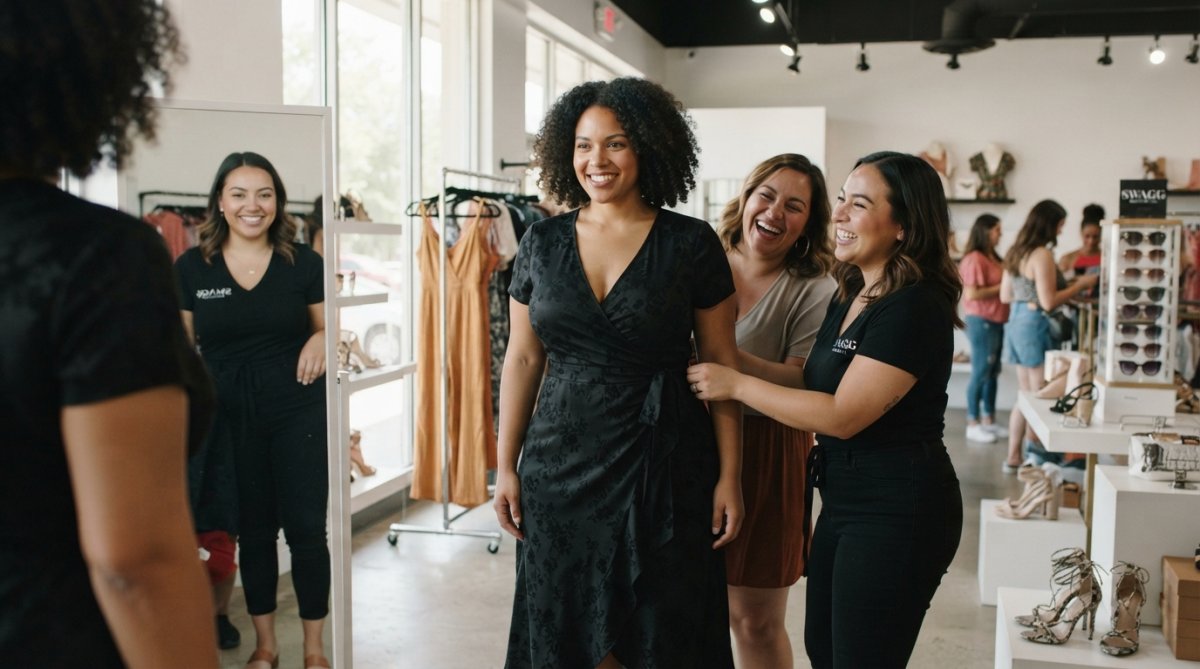
Wrap dresses are the most universally flattering silhouette for curvy figures. The diagonal closure creates a natural V-neckline, the fabric cinches at the waist, and the skirt portion flows over the hips without clinging. Fit-and-flare dresses follow the same logic: fitted through the bodice and flaring out at the skirt, they create waist definition and add movement at the hem, which elongates the leg line visually.
Bodycon and Midi Lengths
A well-fitted bodycon in a structured stretch material highlights curves intentionally and looks polished rather than tight. The key is fabric: it needs enough stretch to move with you, but enough structure to hold its shape. The Take a Peek Mock Neck Multi Cut Out Midi Dress at Swagg Bootique is a strong example, a long-sleeve cutout bodycon midi that hugs the body while the mock neck and strategic cutouts create visual interest.

Midi length works particularly well for curvy figures because it elongates the leg while keeping proportions balanced.
| Silhouette | Best For | Key Feature | What to Avoid |
|---|---|---|---|
| Wrap dress | All curvy shapes | Adjustable waist definition | Thin, clingy fabrics |
| Fit-and-flare | Hourglass, pear | Flared skirt balances hips | Very short hemlines |
| A-line | Apple, pear | Skims over hips | Heavy hip embellishment |
| Bodycon midi | Hourglass, confident all shapes | Highlights curves intentionally | Thin, unstructured knit |
| Empire waist | Apple, petite curvy | Defines below bust | Drop waist versions |
Step 4: Pick Flattering Necklines for Curvy Women
Flattering necklines for curvy women frame the face and draw attention to the parts of your body you want to highlight. The most flattering necklines for curvy women are V-necks, sweetheart necklines, and square necklines.
- V-neck: Creates a vertical line that elongates the torso.
- Sweetheart: Frames the bust beautifully and adds feminine structure without requiring a plunging cut.
- Square neck: Trending hard in 2026, the clean horizontal line broadens the shoulder and frames the collarbone.
- Mock neck: Works best on hourglass and pear shapes. The Kelli Long Sleeve Mock Neck Mesh Mini Dress from Swagg Bootique shows how a sleek mock neck paired with a curve-loving silhouette can feel bold and head-turning.
High necklines and boat necks tend to add visual width to the chest and shoulder area, which works for pear shapes but can feel overwhelming on apple or full-bust figures.

Key Takeaway
Your neckline choice should complement your body type, not fight it. For full busts, avoid halter necks, the thin straps create too much visual contrast and offer minimal support.
Step 5: Select the Right Fabrics and Use Undergarments Strategically
Fabric drape and stretch determine whether a dress looks intentional or accidental on a curvy body. The best fabrics for dresses for curvy figures share two qualities: enough structure to hold shape, and enough give to move with the body. Double knit, stretch tailoring, ponte, and structured jersey all hit that balance.
What to look for on product pages:
- Stretch material: Look for fabric compositions that include elastane or spandex (typically 5-10% is enough for comfortable stretch without losing structure).
- Lining: Lined dresses hold their shape better and prevent fabric from pulling or bunching.
- Fabric weight: Heavier fabrics drape more smoothly over curves; very lightweight fabrics can be sheer or clingy.
Undergarments are a styling tool. A seamless shapewear brief smooths the hip and thigh line without compressing uncomfortably. A well-fitted strapless bra or adhesive cups matter more than the dress itself when the neckline is anything other than a standard strap. According to the American Apparel & Footwear Association's fit guidance, proper foundational garments are one of the most consistently cited factors in how clothing fits and photographs.
Buy shapewear that's sized to your actual measurements. Buying too small creates bulge at the edges and restricts movement.
Step 6: Nail the Styling Details, Color, Proportion, and Confidence
Color blocking, proportion, and styling choices can shift how a dress reads on your body more than the silhouette itself.
- Solid colors and bold hues create a clean, uninterrupted line from shoulder to hem, which reads as elongating. Rich colors and texture are genuinely flattering for curvy figures because bold color draws the eye to the whole look.
- Color blocking can be used strategically: a darker panel at the sides creates the illusion of a narrower silhouette, while a contrasting waistband defines proportion.
- Vertical lines in prints or seaming elongate the body; horizontal stripes or wide horizontal seams do the opposite.
- Hemline placement matters. A hem that hits at the narrowest part of your calf is universally lengthening. Mid-calf tends to visually cut the leg at its widest point, avoid it if leg elongation is a priority.
Research from the Journal of Experimental Social Psychology's clothing and cognition studies shows that what you wear affects how you carry yourself, which in turn affects how others perceive you. Wearing something that genuinely fits and flatters is not vanity, it's a performance tool.
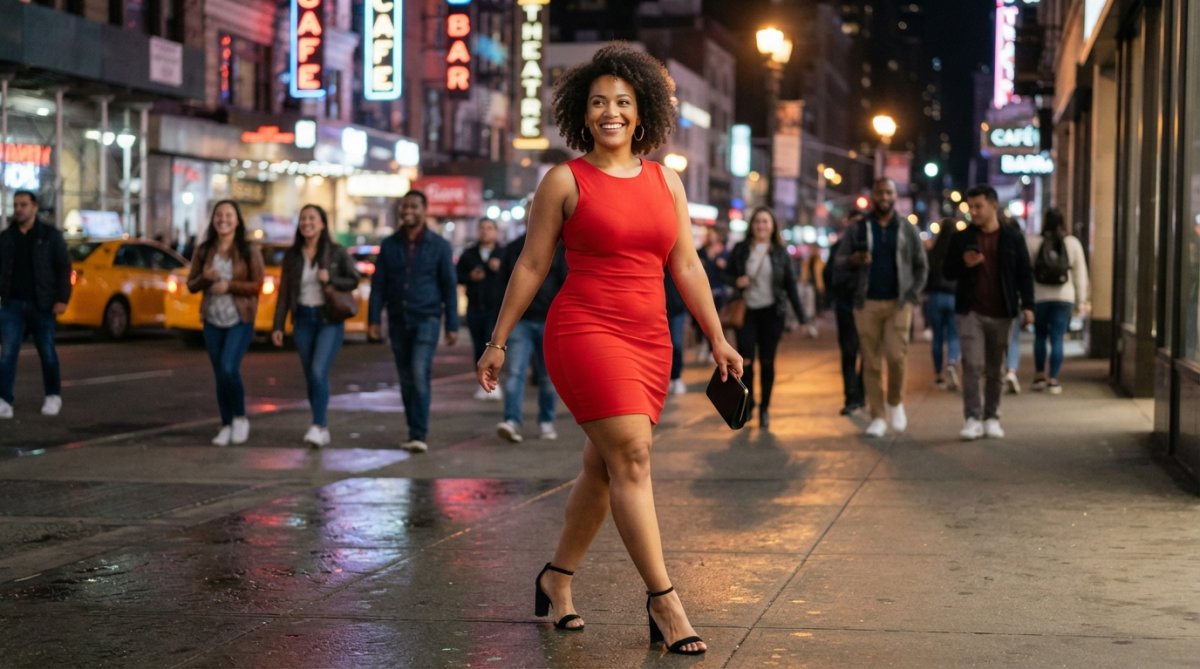
The I'm Bout To Go UP Mock Neck Front Cut Out Mini Dress is a practical example of these principles in action: a curve-hugging silhouette, strategic cut-out detail, and a clean round neckline that keeps the look intentional rather than busy.

Pro Tip
Pair any bodycon or fitted dress with a pointed-toe heel. The elongated toe line extends the visual leg length significantly, more than platform heels, which cut the leg at the ankle.
What to Ignore: Bad Advice About Dresses for Curvy Bodies
Some styling rules have been repeated so many times they've calcified into "fact." Most of them are wrong, outdated, or based on the idea that curvy bodies need to be minimized.
"Always wear dark colors to look slimmer." Dark colors can elongate, yes, but they're not a rule. Bold colors, bright prints, and statement fabrics look exceptional on curvy figures. The 2026 fashion direction is explicit: bigger style, sharper shape, zero interest in playing it safe.
"Avoid bodycon if you have curves." A well-fitted bodycon in the right fabric is one of the most flattering options available. The issue is always fit and fabric quality, not the silhouette category.
"Wear loose clothing to hide your shape." Clothes that skim and define your actual proportions look more polished than clothes that obscure them.
"You can't wear prints." The actual rule is about scale and placement, not prohibition. A large, bold print works beautifully. Avoid busy small-scale prints that fragment the silhouette.
As noted by the Fashion Institute of Technology's resources on body-positive styling, the most effective styling advice centers on fit and proportion rather than concealment, a perspective that aligns with how the fashion industry has shifted in 2026.
A basic tailor alteration, taking in the waist on a dress that fits your hips, costs less than most people assume and transforms an okay fit into a perfect one.
Finding dresses that genuinely work for your body takes more than scrolling through size filters. You need the right silhouette, accurate measurements, fabric that holds its shape, and the confidence to ignore outdated rules. Swagg Boutique has been applying pressure since 2011, with new drops arriving weekly, fast shipping, and a curated selection built specifically for women who want to turn heads at birthdays, nights out, and every occasion in between. Get started with Swagg Boutique and get 10% off your first order when you join the VIP list.
Frequently Asked Questions
What type of dress is most flattering for curvy bodies?
Wrap dresses, fit-and-flare styles, and A-line midis consistently flatter curvy figures because they create waist definition and balance proportions. Bodycon dresses in stretch fabric with ruching or strategic seaming also work well for hourglass and pear shapes. The most important factor is waist definition, any silhouette that marks the narrowest part of your torso will create a flattering, intentional shape rather than a boxy or shapeless look.
How do I know if a dress will fit my curves correctly when ordering online?
Take three measurements before ordering: bust, waist, and hips in inches. Compare them against the brand's size chart rather than guessing by your usual size. Look for stretch fabrics like ponte or jersey, which allow more give across the hips and chest. Check whether the brand sizes by hip measurement specifically, most dresses for curvy body types should be sized to the widest point. Reading fit notes in product descriptions also helps you spot whether a style runs narrow through the hip.
What fabrics work best for curvy silhouettes?
Fabrics with stretch and drape perform best on curvy bodies. Jersey, ponte, and stretch mesh move with the body without pulling or bunching at the hips or bust. Soft structured fabrics, like double knit or stretch tailoring, hold their shape while still accommodating curves. Avoid stiff, non-stretch wovens like raw cotton or thick denim for fitted styles, as they resist the body's natural contours and create tension at the widest points rather than draping smoothly.
What is the best neckline for a curvy woman?
V-necks and sweetheart necklines are the most consistently flattering for curvy women because they draw the eye vertically and create the appearance of a longer neck and defined bust line. Mock neck and square necklines also work well when the dress has strong waist definition elsewhere. The neckline matters most in proportion to the bust, a deeper V on a fuller bust creates visual balance, while a high mock neck pairs best with a cinched waist and flared or fitted skirt below.
This article was written using GrandRanker