

Quick Summary
To build a sustainable trendy wardrobe, start by auditing what you already own and sorting each piece into wear, fix, or let go. Then buy only pieces that fill real gaps, check fabric content and care labels, and prioritize well-made items you can style several ways.
- Sort every item into wear, fix, or let go before buying anything new.
- Choose natural-fiber content of 90% or higher for pieces you wear weekly.
- Use the 48-hour rule: if you still want it after two days, buy it.
- Check the cost per wear, such as a $20 top worn 20 times costing $1 per wear.
- Learn four basic repairs: reattaching buttons, fixing split seams, patching denim, and darning knits.
Ready to build a wardrobe you'll wear all year?Swagg Bootique LLC offers versatile, trendy pieces with weekly new drops and fast shipping.
Shop Trendy Basics
Table of Contents
- Sorting Pieces by Wear, Fit, and Condition
- Learn to Read Fabric Quality and Care Labels
- Tips for Buying Sustainable Fashion Without Overspending
- Finding Sustainable Clothing Brands Worth Your Money
- Keeping Trendy Pieces Out of the Landfill: Care and Repair
- Sustainable Fashion Ideas for Students on a Budget
- Plan Your First Trendy, Sustainable Purchase This Week
- Frequently Asked Questions
Start With a Wardrobe Audit: Sort What You Already Own
Most shoppers buy new clothes before they know what they already have. A sustainable trendy wardrobe starts in the closet, not the cart. Pull everything out and look at it with fresh eyes.
The Sustainable fashion research from the University of Johannesburg (2025) on why people adopt capsule wardrobes shows that consumers have many different reasons for choosing fewer, more intentional pieces.
Sorting Pieces by Wear, Fit, and Condition
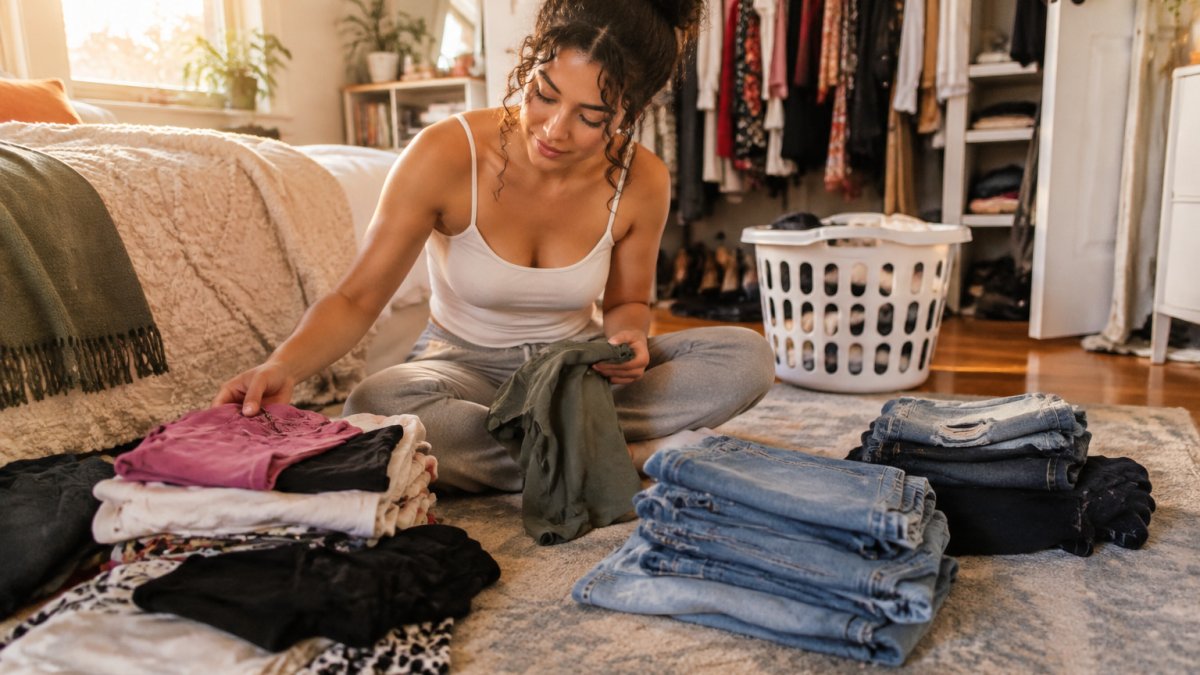
Sort every item into one of three piles: wear, fix, or let go.
- Wear: Fits well, feels good, and you reach for it often.
- Fix: Needs a button, hem, or small repair.
- Let go: Stained, stretched out, or never worn.
Be honest with yourself. A top you have never worn with a trendy pair of jeans is not a keeper just because it was a good deal.
Digitally Logging Your Wardrobe
Take a quick photo of each keeper and note its color, fabric, and occasions. A simple phone album or notes app works well. This makes it easier to spot gaps and avoid buying duplicates later.
Learn to Read Fabric Quality and Care Labels
Fabric quality decides how long a trendy piece stays in rotation. A garment made from a dense, well-finished cloth can survive dozens of washes; a thin, loosely woven one can pill or lose shape within a season. The label is your first filter, but the label alone will not tell you everything. You need to read it and then test the cloth in your hands.
What the Fiber Mix Actually Tells You
Start with the percentages, not just the fiber names. A blend is not automatically worse than a single fiber, but the ratio changes how a piece behaves.
- High natural-fiber content (cotton, linen, hemp, wool): Breathes well, wears gracefully, and can be repaired more easily. Look for 90% or higher natural content on pieces you plan to wear weekly.
- Small synthetic additions (5% or less spandex or elastane): Adds stretch and shape retention to leggings and fitted tops. This is a functional use, not a red flag.
- High synthetic content (polyester, acrylic, nylon above roughly 50%): Can be durable and colorfast, but tends to pill, trap odor, and shed microfibers in the wash. It is a reasonable choice for outerwear and activewear, less so for everyday basics you want to last years.
- Vague or missing fiber content: Treat this as a warning. A product page or hangtag that will not state percentages is hiding something.
Read the Care Label Before You Fall in Love
Care instructions are a preview of how much work the garment will be. A piece labeled "dry clean only" costs more than its price tag over its life. A piece labeled "machine wash cold, tumble dry low" fits an everyday rotation. Check for these signals:
- Cold wash and low dry: The most forgiving combination for cotton, linen, and most blends.
- Hand wash or dry clean only: Fine for a blazer or a silk piece, but think twice before adding several to a casual wardrobe.
- No care label at all: A common sign of very cheap manufacturing. Skip it.
The In-Store and In-Hand Tests
Labels do not capture construction. Use these quick checks on any piece you are considering:
- The light test. Hold the fabric up to a window or overhead light. If you can clearly see your hand through a t-shirt or a pair of leggings, the cloth is thin and will likely wear through at stress points.
- The seam tug. Gently pull the fabric on either side of a side seam and a shoulder seam. If the stitching gapes or you see loose threads, the seam is under-finished.
- The stretch-and-recover test. Stretch a knit across your hands and release it. Good knits snap back to shape; poor ones stay baggy.
- The rub test. Rub a small area of the fabric between your fingers. If pills or fuzz appear immediately, the surface will pill in the wash.
- The stitch density check. Look at a hem or cuff. Dense, even stitches (roughly 10 to 12 per inch on a quality garment) hold up; long, sparse stitches pull out.
Match the Fabric to the Trend
Not every trend needs a heirloom fabric. A trendy piece you plan to wear for one or two seasons can reasonably be a lower-cost blend.
Watch out: a soft hand-feel is not the same as quality. Fabric softeners and finishes can make a thin, low-density cloth feel luxurious in the store and flat after three washes.
Here is a quick reference for the fabric and care signals covered above.
| Signal | What it means | Action |
|---|---|---|
| 90% or higher natural fiber | Breathes well and wears gracefully | Choose for weekly-wear pieces |
| 5% or less spandex or elastane | Adds stretch and shape retention | Acceptable functional use |
| Polyester, acrylic, or nylon above roughly 50% | Tends to pill and shed microfibers | Better for outerwear and activewear |
| Cold wash and low dry label | Most forgiving care combination | Fits everyday rotation |
| No care label at all | Common sign of very cheap manufacturing | Skip it |
| Stitch density of roughly 10 to 12 per inch | Holds up in a quality garment | Check hems and cuffs |
Tips for Buying Sustainable Fashion Without Overspending
You do not need a big budget to build a sustainable trendy wardrobe. You need a plan.
- Buy fewer, better pieces. Choose items you can style at least three ways.
- Shop your gaps. Buy only what fills a real hole in your closet.
- Wait 48 hours. If you still want it after two days, it is probably worth it.
- Check the cost per wear. A $20 top worn 20 times costs $1 per wear.
Watch out: a "trendy" price tag can hide a poorly made piece. Check fabric and stitching before you buy, not just the sale price.
Looking for affordable basics to build on? The Charr Cotton Stretch Leggings are a practical, low-cost piece for everyday rotation, priced at $9.99. Browse the Charr leggings.

Finding Sustainable Clothing Brands Worth Your Money
Not every brand that uses the word "sustainable" delivers on it. Look for specifics.
- Clear fabric content on every product page
- Real care instructions included with the item
- Transparent sizing and fit details
- Pieces designed to be styled many ways
Many shoppers find it helpful to start with brands that describe their fabrics and fit in detail. Specifics like these make it easier to judge whether a piece will last.
If you want a versatile layering piece, the Can't See Me Sleeveless 100% Cotton Graphic Tee can be worn as an oversized top or styled as a mini dress with a belt. It is made from soft, breathable cotton and costs $19.99. See the graphic tee.

Keeping Trendy Pieces Out of the Landfill: Care and Repair
Most guides stop at "wash cold and hang dry." That is the easy half. The harder, more useful half is repair, the small fixes that keep a trendy piece in rotation instead of in a donation bag. A missing button, a split seam, or a small stain is rarely the end of a garment's life, but it is often the reason people replace one.
The Four Repairs That Save Most Garments
You do not need a sewing machine for any of these.
1. Reattaching a button. Thread a needle with about 18 inches of thread and knot the end.
2. Fixing a split seam. Turn the garment inside out. Pin the two edges together along the original stitch line.
3. Patching denim. For a small hole or worn knee, cut a patch from similar-weight denim or canvas slightly larger than the damaged area.
**4.
Care Habits That Prevent the Need for Repair
Repair is the backup plan; care is the first line of defense. A few habits make the biggest difference:
- Wash less often. Most cotton tops and denim can go several wears between washes. Spot-clean small marks instead of running a full load.
- Turn garments inside out. This protects prints, graphics, and seams from abrasion in the drum.
- Use a mesh laundry bag for knits, delicates, and anything with a button or zipper that could snag other pieces.
- Zip zippers and button buttons before washing to prevent snags.
- Hang dry or lay flat. Dryer heat is the single biggest cause of shrinkage and elastic breakdown in stretch fabrics.
- Fold knits; hang wovens. Hanging a heavy knit stretches the shoulders; folding a structured woven can crease it permanently.
- Store clean and dry. Moths and mildew do more damage in storage than in the closet.
Build a Small Repair Kit
A basic kit costs very little and pays for itself with the first saved garment. Most households already have most of it:
- Hand-sewing needles in a few sizes
- Thread in black, white, navy, and a neutral beige
- Small scissors or snips
- A seam ripper
- Straight pins
- A few spare buttons and a small piece of denim or canvas for patches
Keep the kit where you get dressed, not in a drawer in another room. The repair you can do in two minutes is the repair that actually happens.
When to Repair and When to Let Go
Repair makes sense when the fabric around the damage is still sound. It does not make sense when the cloth itself is thin, pilled across the whole surface, or stretched out of shape.
Watch out: do not iron over a patch, a button, or a printed graphic. Heat can melt synthetic patch adhesive, crack buttons, and lift prints. Press around the repair, not on it.
Sustainable Fashion Ideas for Students on a Budget
Students can build a sustainable trendy wardrobe on a tight budget.
- Start with basics. Plain cotton tops and leggings mix with almost anything.
- Swap with friends. Trade pieces for a night out instead of buying new.
- Shop secondhand. Thrift stores often carry quality pieces at low prices.
- Mix and match. One jacket can change three different outfits.
Keep a short list of go-to pieces so you know what to buy and what to skip.
Plan Your First Trendy, Sustainable Purchase This Week
Start small this week. Finish your wardrobe audit, pick one gap to fill, and check the fabric and care label before you buy. Use the 48-hour rule to avoid impulse buys.
When you are ready, shop the Swagg Boutique collection for styles that pair well with what you already own. New drops arrive weekly, so check back often. Join the VIP list to get early access to new arrivals and 10% off your first order.
Frequently Asked Questions
How do I start building a sustainable wardrobe?
Begin with a wardrobe audit. Pull everything out, sort it into keep, repair, and donate piles, and note which items you wear most often. This shows you the gaps and the duplicates before you buy anything new. Next, pick two or three trend pieces that fit your existing basics, such as a fitted cotton tank or a versatile graphic tee, and build outfits around them. Shopping this way keeps spending focused and limits impulse purchases that end up unworn.
How can I follow fashion trends more sustainably?
Choose trend pieces with a clear use case and a low price-per-wear. Instead of buying a full look for one event, select one statement item and pair it with pieces you already own. Stretch cotton tops, leggings, and simple pants work across seasons and styles. Wear a trend for a few months, then decide whether it earns a permanent place in your closet or should be resold or donated.
How do I make my clothes last longer?
Follow the care label, wash cold with like colors, and turn graphic pieces inside out to protect prints. Tumble dry on low or hang dry where possible, since heat breaks down elastic and cotton fibers over time. For example, a cotton stretch tank washed cold and hung to dry will keep its shape far longer than one tumbled on high. Store knits folded rather than hung, and mend small seams or loose threads as soon as you notice them.

